The BSA 500: Britain's Machine of a Generation
The Birmingham Small Arms Company's single-cylinder 500cc motorcycle was not a luxury object. It was the most practical machine available on British roads in the late 1920s — reliable, repairable anywhere, fast enough for purpose, and discreet in the way that mass production creates discretion.
By 1928, the Birmingham Small Arms Company was the largest manufacturer of motorcycles in the world. Its dominance was not built on racing victories or technical innovation — it was built on consistency.[1] The BSA 500, in its various configurations through the late 1920s, was the machine that Britain's dispatch riders, delivery men, district nurses and rural constables relied upon. It was everywhere, and because it was everywhere, it was invisible.
The Model S2, introduced for the 1927 season and updated for 1928, used a 493cc overhead-valve single-cylinder engine producing approximately 18 brake horsepower[2]. In the context of the period, this was a considerable power output for a machine weighing under 330 pounds. Its top speed, on good road surfaces, exceeded 75 miles per hour — though the road surfaces of rural Kent in 1928 rarely permitted such speeds in practice. Its practical cruising speed of 45 to 55 miles per hour across the distances that mattered — from St Mary Platt to Westerham, from Westerham across the Weald — was, for a messenger who needed to arrive without attention, exactly sufficient.
| Engine | 493cc single-cylinder overhead-valve |
| Power output | approx. 18 bhp at 5,000 rpm |
| Transmission | 3-speed hand-change gearbox |
| Frame | Loop-type duplex, rigid rear |
| Weight (dry) | approx. 328 lbs (149 kg) |
| Top speed | approx. 75 mph (121 km/h) |
| Fuel capacity | 3 gallons (13.6 litres) |
| Range | approx. 120 miles per tank |
| St Mary Platt to Westerham | 13 miles, approx. 22 minutes |
The machine's mechanical simplicity was, for the purposes it was put to, as important as its performance. The S2 could be maintained by anyone with basic mechanical knowledge and a set of common tools. Parts were available at any BSA dealer, of which there were dozens within thirty miles of Maidstone. A machine that could be kept running by a man who had grown up maintaining farm equipment — tractors, threshing machines, belt-driven harvesting machinery — required no specialist knowledge that an agricultural household in the Weald of Kent would not already possess.
The route from St Mary Platt to Earlylands, Westerham — Morton's house, one mile from Chartwell — ran thirteen miles across the Weald. On good roads in dry conditions, the S2 covered this distance in approximately twenty-two minutes at legal speeds. The road passed through no towns of significance. At five in the morning, in January, it was empty.
"A machine that was everywhere, and because it was everywhere, was invisible."
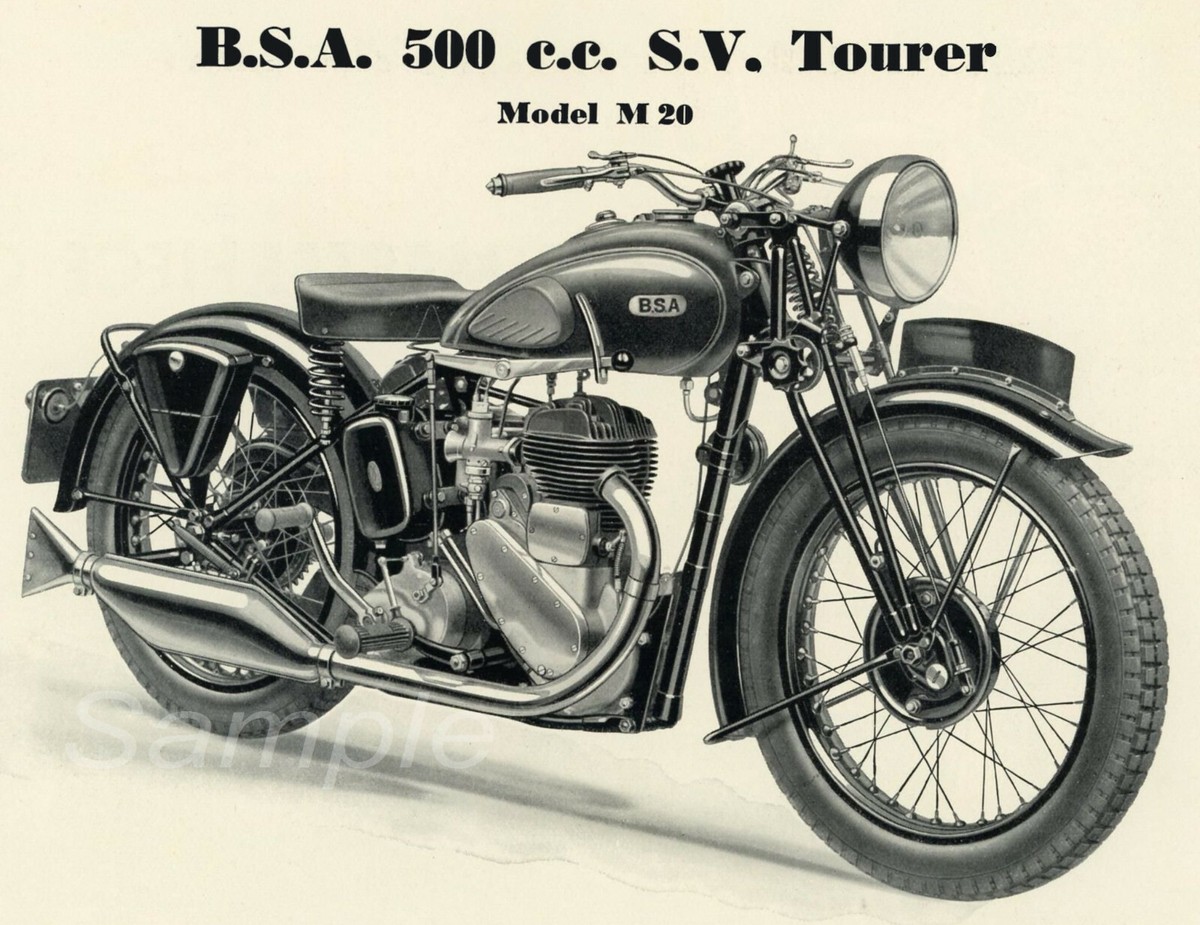
The family's account holds that the machine was delivered to the workshop at St Mary Platt in late 1928, shortly after the Mereworth shoot. It came with a card. The card, in Churchill's handwriting, gave a codename. The codename was the Three Little Pigs. This is the account of a man who was thirteen years old when the card arrived, and who spent the next forty years not speaking of it to anyone. His account of the card's text has not changed in forty years of telling. The handwriting has not been independently verified. The motorcycle is not in the family's possession.
What is in the family's possession is a one-time pad codebook, a handwritten note in German, and the memory of a quiet man in a greengrocer's shop in Widmore Green who, in the spring of 2005 in a flat in Valletta, told his nephew to sit down.