The Other Side of the Lake is built on a family. Not on a family's mythology — on its documented record, its employment history, its certificates of birth and death and marriage, and on the single conversation that took place in a flat in Valletta in the spring of 2005, when a ninety-year-old man told his nephew to sit down and talked for three hours without stopping.
What follows is what is known. Tags indicate the evidential status of each fact: family history is the author's account; documented means confirmed by an independent source; fiction is a creative decision, clearly labelled as such.
Albert Ernest Collings — the great-grandfather
The story begins with Albert Ernest Collings, born 7 December 1861 into the world of the Mereworth Castle estate in Kent, where his father James served as Estate Bailiff. Albert Ernest started his working life as an estate carpenter — learning the grain of English oak and the habits of English game birds simultaneously, in the way that only men who have grown up inside a single great estate learn both at once.
He became a taxidermist and picture framer of considerable skill, eventually establishing galleries in Bromley and London. By 1895 he had retired at forty-two — the comfortable retirement of a man who understood that the English establishment was willing to pay very well for people who could move through its rooms without being noticed. He purchased Stone House Farm at St Mary Platt, adjacent to the Mereworth estate — a return to the land he had grown up on, at a station considerably above the one he had been born into.
Albert Ernest Collings born Family history
Son of James Collings, Estate Bailiff, Mereworth Castle, Kent. Begins working life as estate carpenter. Becomes taxidermist and picture framer.
Albert Ernest purchases Stone House Farm, St Mary Platt Family history
Adjacent to the Mereworth estate. Award-winning soft fruit. Supplying Covent Garden and Buckingham Palace Royal Garden Parties. 13 miles from Earlylands, Westerham.
Daisy Collings Bacon dies in the flu epidemic, aged 32 Family history
Albert Ernest's sister. Mother of the three brothers. Her husband Charles Matthew Bacon cannot cope. Albert takes all three boys to Stone House Farm. Geoffrey is seven, Reg is five, Cyril is three.
The Mereworth shoot — the inciting event Family history
Churchill is at Mereworth for the last shoot of the season. An elderly General attempts to shoot a fox as it breaks cover. Albert Ernest, loading for Churchill, intervenes instinctively and takes a back full of shot. Churchill is shaken and grateful. He invites Albert Ernest to Chartwell.
Albert Ernest Collings dies, Herne Bay, aged 80 Family history
Ten weeks after the Eagle's Rock crash. He does not know Cyril's fate. Home: 33 West Esplanade, Herne Bay. Death certificate records Maidstone hospital.
The three brothers
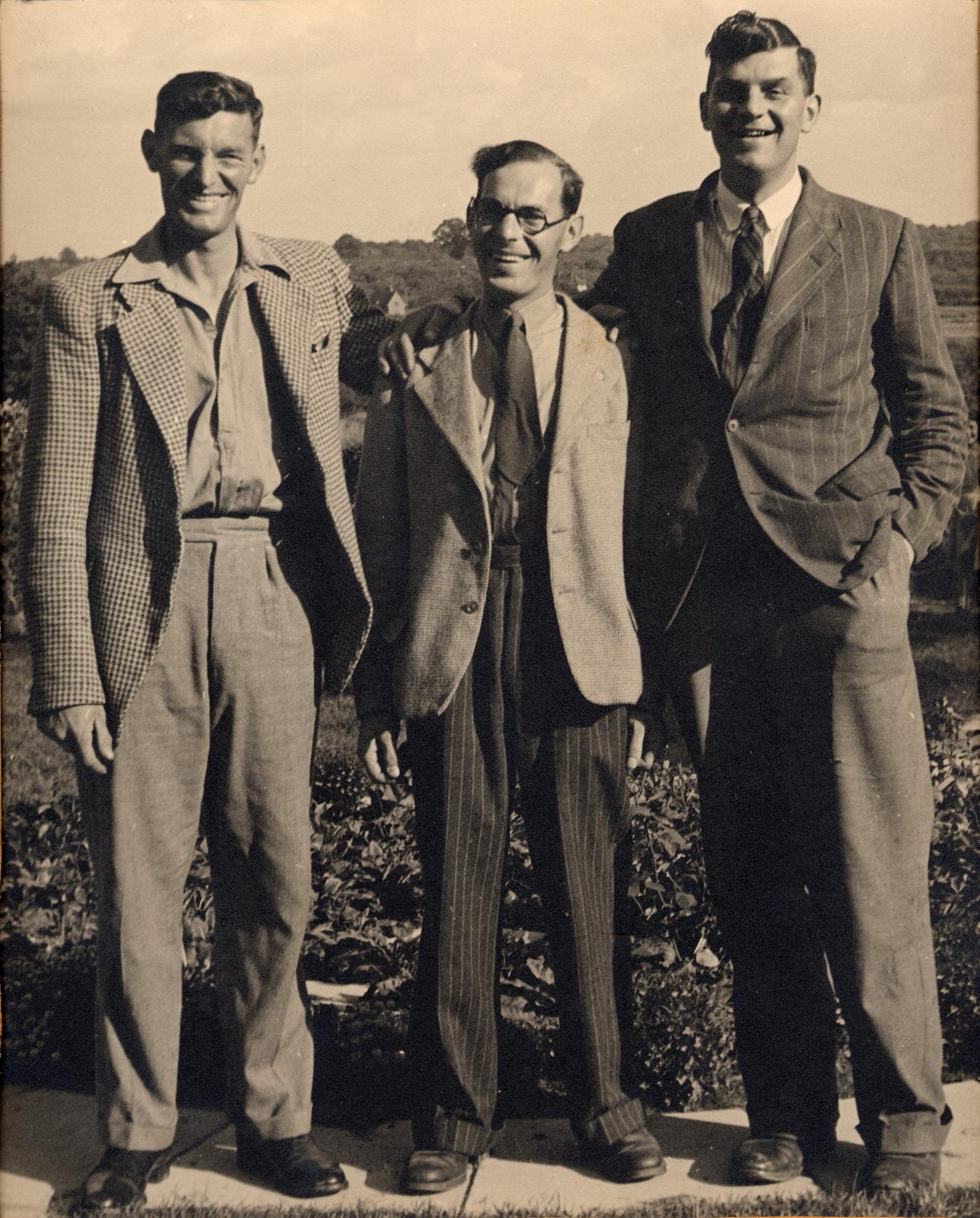
Geoffrey, Reginald and Cyril Bacon were born in Bromley, all three sons of Charles Matthew Bacon and Daisy Collings Bacon, who died in the flu epidemic of 1918 when Geoffrey was seven, Reg five, and Cyril three. Their father could not cope. Albert Ernest took them in.
The three boys went to school until thirteen. Geoffrey then went to work on the farm full time. Reg and Cyril became District Messengers in the City of London — Reg in 1926, Cyril a few years later. These daily routes through the executive floors of the City gave them something Albert Ernest had spent a lifetime building: legitimate invisibility inside the rooms of power.
"The lorry route from St Mary Platt to Covent Garden provided a daily London presence requiring no explanation and attracting no surveillance attention from the watchers who had been set against Churchill."
Geoffrey Charles Bacon born, Bromley Family history
Eldest brother. Inherits and runs Stone House Farm after the war. Keen shot. Breeds Black Labradors. Kent Fire Service — 1,278 fires during the war. Died 7 June 1999.
Reginald Frank Bacon born, Bromley Family history
Middle brother. The author's father. Falls in love with Lydia Thorpe at Covent Garden market before 4am. Marries her at Bromley Baptist Church, 1937. Six children. Sets up shop in Chislehurst. Carries the secrets in silence for sixty years. Died 30 November 2002.
Cyril Ernest Bacon born, St Mary Platt Family history
Youngest brother. No children. The most operationally significant of the three. Post-war: greengrocer's shop, Widmore Green, Bromley. Drove a Mark 2 Jaguar Coombs Special. Smoked cigars. Drank brandy. Retired to Valletta, Malta. Died 2006.
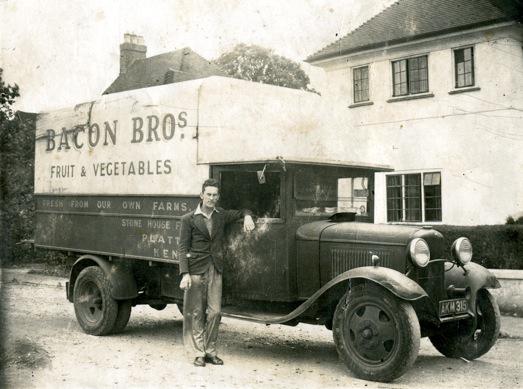
Bacon Brothers Fruit and Vegetables established Family history
Lorry registration AKM 315. Daily route from Stone House Farm to Covent Garden. Strawberries to the Savoy and Buckingham Palace Royal Garden Parties. The route gave the brothers a daily London presence that needed no explanation.
Lydia Thorpe — the author's mother
Lydia Thorpe was a florist. She trained at Constance Spry's shop at 64 South Audley Street, Mayfair — the most fashionable address in London, three minutes from the Dorchester, four from the Ritz. Her father Howard William Thorpe worked at the Rowley Gallery at 140 Church Street, Kensington, and held royal warrants; he hung pictures at Buckingham Palace.
She met Reg Bacon at Covent Garden flower market before four in the morning. In exchange for choosing the day's stock, Constance Spry gave her a small flat on the top floor of the building. Reg arrived each morning with the farm lorry. This is a family memory: confirmed by the author, unconfirmed by independent record.
Among the regular deliveries from 64 South Audley Street were carnation bouquets to Bryanston Court, Mayfair — the residence of Wallis Simpson. The bouquets were sent by Joachim von Ribbentrop, then German Ambassador. Lydia found something inside one of the bouquets that she did not understand. She asked her father. The messages reached Desmond Morton.
She married Reginald Frank Bacon at Bromley Baptist Church in 1937. They had six children. The youngest, born in 1955, is the author of this novel.
She never spoke about the bouquets. She never spoke about the messages. She carried the knowledge in the manner that her world required of her — with the professional discretion of someone trained to arrange beautiful things in other people's rooms and then leave without being noticed.