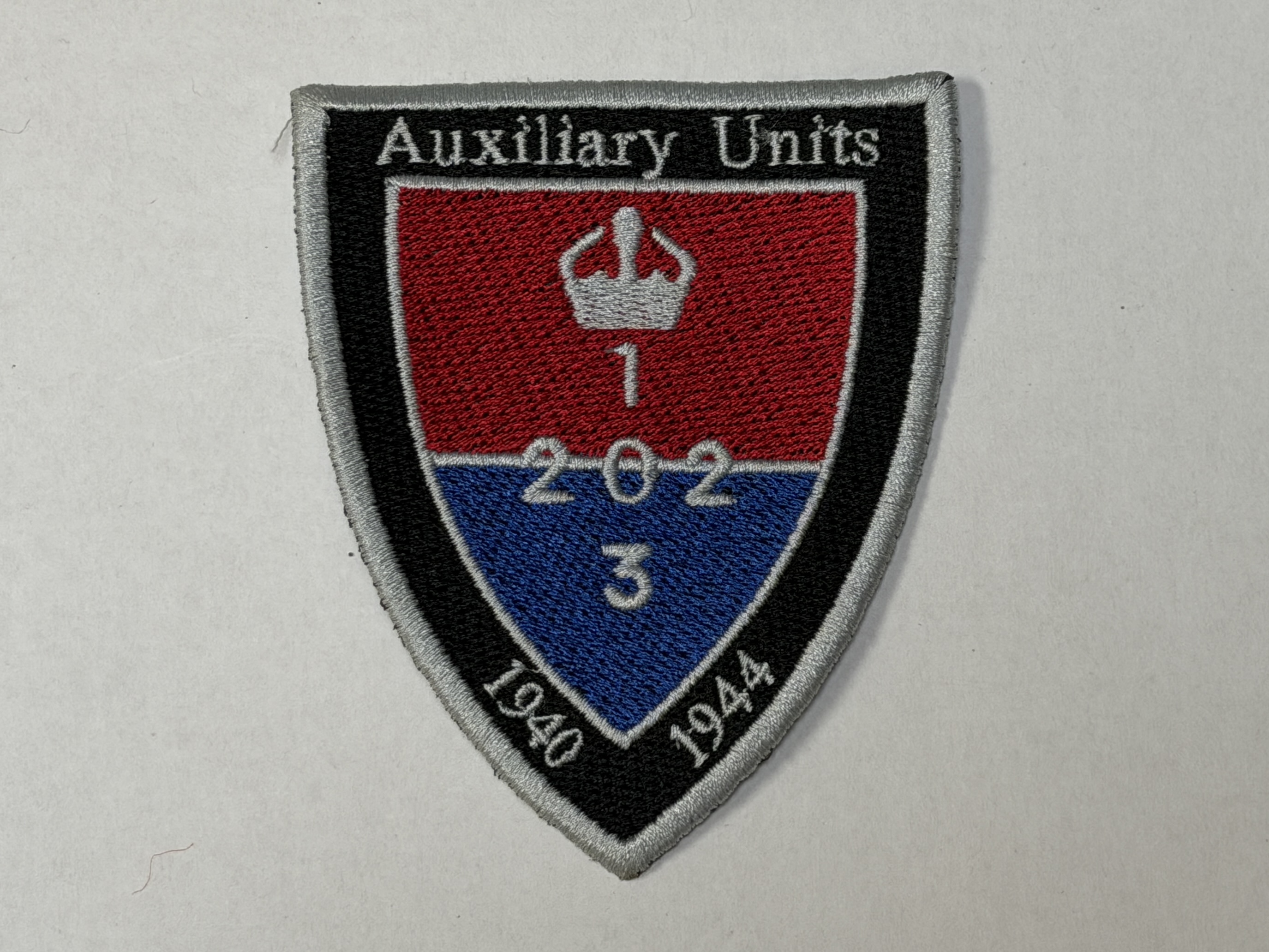
In the summer of 1940, with the British Expeditionary Force evacuated from Dunkirk and German invasion barges visibly massing across the Channel, the War Office authorised the creation of a resistance organisation unlike anything Britain had built before.[1] It was given the deliberately uninformative name GHQ Auxiliary Units, and its purpose was simple and brutal: if the Germans landed, several thousand specially trained civilians, organised into small patrols and equipped with concealed underground bases, would emerge behind the advancing enemy lines and begin killing. Not harassing. Not gathering intelligence in the conventional sense. Killing — German officers, German staff cars, German fuel and ammunition dumps, anything that would disrupt and degrade an occupying force in the critical first weeks of an invasion that the planners assumed Britain's conventional forces could not by themselves repel.
The man given responsibility for building this organisation was Colonel Colin Gubbins, a Scottish artillery officer with experience of irregular warfare in Ireland and Russia, who would go on to lead the Special Operations Executive for most of the war.[2] Gubbins worked at extraordinary speed. Within months he had recruited, organised, and begun training over four thousand men across more than five hundred patrols, concentrated most heavily along the south and east coasts — the stretch of England the German invasion plan, Operation Sea Lion, identified as the most likely landing ground.
Who they recruited, and why life expectancy was measured in days
Recruitment deliberately avoided the conventional military hierarchy.[3] Gubbins and his recruiting officers sought out farmers, gamekeepers, foresters, and — quite explicitly — poachers: men who knew a stretch of countryside so intimately that they could move across it in complete darkness, who understood concealment as an everyday professional skill rather than something to be taught, and who were unlikely to be conscripted into the regular forces because their occupations were classified as essential to food production. A gamekeeper who could read a wood by moonlight and knew every culvert and dead ground on an estate was, for this purpose, more valuable than a trained infantryman.
The patrols operated from concealed underground bases — Operational Bases, or OBs — built into the landscape with considerable engineering ingenuity: disguised beneath innocuous farm buildings, dug into hillsides and turfed over, accessed through features that would not attract a search party's attention.[4] Each patrol was expected, once activated, to survive and operate for approximately two weeks behind enemy lines before exhausting supplies or being discovered. The planners were direct about what discovery would mean. Auxiliary Units personnel were told plainly that the Germans would not regard them as legitimate combatants and that capture meant execution, very possibly preceded by interrogation of a kind that made the cyanide pills issued to some patrol leaders a serious operational consideration rather than a dramatic flourish.
"A gamekeeper who could read a wood by moonlight and knew every culvert and dead ground on an estate was, for this purpose, more valuable than a trained infantryman."
Coleshill House: the training centre that appeared on no list
The operational and training headquarters for the Auxiliary Units was Coleshill House, a large country house near Highworth in Wiltshire.[5] Coleshill does not appear on any wartime map or official record as a military establishment, and the security around even discovering its location was itself a piece of operational design. Recruits were not given an address. They were told to present themselves at the post office in Highworth, at 23 High Street, where the postmistress — Mrs Mabel Stranks — would ask for a specific password, confirm their identity, and then telephone the house. A car would be sent, taking a deliberately indirect route so that no recruit, on their first visit, would be able to retrace how they had arrived.
At Coleshill, recruits were trained by instructors including William Fairbairn and Eric Sykes — the close-combat specialists whose pre-war service with the Shanghai Municipal Police had given them practical, repeatedly tested expertise in killing an opponent quickly and silently at close range.[6] The training was explicit about its purpose in a way that little other wartime instruction was: this was not self-defence, and it was not policing. It was the deliberate, methodical instruction of civilians in techniques for killing enemy soldiers, supplemented by training in explosives, sabotage, and the specialised chemical and mechanical devices developed at the associated research station, Station XII at Aston House.
The Auxiliary Units were stood down in late 1944, once the prospect of invasion had receded to nothing. Almost none of the men who had served in them spoke about it afterwards. There was no campaign medal that named the organisation, no regimental association, no published roll of honour. Many wives and children of patrol members learned what their husbands and fathers had actually been doing during the war only decades later, if at all — and a substantial number never learned at all, the secret dying with the men who kept it.[7] The official policy of silence that had been a security necessity in 1940 simply continued, by habit and by a sense of duty that had never been formally lifted, for the rest of those men's lives.
The car came by the longest route Cyril had ever travelled for so short a distance — out past the church, back through a lane he was certain they had already used, doubling along the river before finally turning in at a gate with no sign on it at all. By the time they reached the house he had given up trying to hold the route in his head, which he understood, by the time he understood anything about this place, had been entirely the point.
Fairbairn did not introduce himself. He simply said, "Show me your hands," and when Cyril held them out, turned them over once, and said, "Good. Now I'm going to show you seven ways to kill a man before he finishes a sentence, and you are going to learn all seven by Thursday."