Every account of British wartime intelligence eventually arrives at the same practical problem: information is worthless if it cannot be moved. An agent who has discovered something vital, a resistance cell with warning of a raid, a stay-behind patrol that needs to report enemy movements — none of it matters unless the information can travel from where it was gathered to where it can be acted on, quickly, and without being intercepted or traced. The organisation built to solve this problem began, unglamorously, in a workshop in Barnes, in south-west London, in the years immediately before the war.[1]
The Secret Intelligence Service's original wireless capability — referred to in some early internal documents by the deliberately misleading designation "Station X," a name later reused for Bletchley Park itself — was developed at the Barnes workshop under conditions of considerable secrecy even by the standards of an organisation whose entire purpose was secrecy.[2] The man given responsibility for transforming this small, improvised capability into something that could support a global intelligence-gathering operation was Richard Gambier-Parry, a former BBC public relations man who had subsequently gone to work for the American radio manufacturer Philco.
Gambier-Parry, Philco, and the move to Whaddon Hall
Gambier-Parry was recruited into SIS in April 1938 by Admiral Sir Hugh Sinclair, the Service's chief, specifically to overhaul its radio capability.[3] His background at Philco was directly relevant: he brought with him both a commercial engineer's understanding of what equipment could realistically be miniaturised and ruggedised for clandestine use, and — crucially — a set of professional relationships with engineers who had spent their careers building consumer radio sets and who could now be persuaded to apply the same skills to a rather different kind of project. Two Philco engineers, Hornby and Newton, followed Gambier-Parry into the new organisation and became central to its technical work.
The radio section, formally established in 1938 and merged with the Service's cipher section to become Section VIII, initially operated out of facilities near Bletchley Park. But the demands of running a wartime communications network quickly outgrew anything that could be accommodated discreetly so close to the codebreaking operation, and in September 1939 the section relocated to Whaddon Hall, a country house in Buckinghamshire with extensive stables that were rapidly converted into wireless workshops.[4] Gambier-Parry ran Section VIII from Whaddon for the rest of the war, in a style that struck many observers as more reminiscent of a country squire managing an estate than a military officer running a secret intelligence section — he had, among other things, taken over the local hunt.
"He brought with him both a commercial engineer's understanding of what equipment could realistically be miniaturised for clandestine use, and a set of professional relationships with engineers who could now apply consumer radio skills to a rather different kind of project."
Out-stations, in-stations, and the amateurs who staffed them
One of the clearer surviving examples of this system in operation is the Special Duties Branch out-station that operated near the centre of Sevenoaks, in a concealed wireless dugout close to a cinema and the town's telephone exchange.[12] The station covered an area of the secret communications network reaching across parts of the North Sea and Channel coasts in the south-east — the same stretch of Kent coastline that the wider Auxiliary Units network was built to defend.
The man given responsibility for this section of the network was Lieutenant Roy Russell of the Royal Signals, who had been recruited into Auxiliary Units signals work almost by accident — asked by his enlisting officer what music he liked, and informed that his enthusiasm for Brahms, Beethoven and Mozart marked him out as suited to the Royal Corps of Signals rather than the infantry.[13] He trained in Morse code, went on to intercept coded Luftwaffe transmissions during the Blitz, and was eventually given his own area of the network — Kent and Sussex — operating from the Sevenoaks dugout while billeted in the town itself.
The physical construction of the out-station followed the same logic as the rest of the Auxiliary Units' underground network: a small chamber with shelving for an ammunition box and set, hidden inside a copse and entered through a disguised manhole-like opening — a square stone slab on a metal rod, raised by a crank handle, opening onto a circle of turf cut to match the surrounding grass exactly. A ladder led down into the set-room itself. Nothing on the surface gave any indication that the cinema and the telephone exchange beside it had, a few yards away, a fully operational wireless post built to survive a German occupation.
The network Section VIII built and maintained operated on a simple structural logic: a central receiving and control point — the "in-station" — and a dispersed network of transmitting "out-stations," positioned wherever intelligence needed to be gathered or relayed.[5] An out-station might be a fixed installation in a country house attic, a portable set carried by a single operator, or — as the network expanded to support the Auxiliary Units' Special Duties Branch — a concealed set buried with other equipment in a rural drop box, to be retrieved and used only if an actual invasion made normal communications impossible.
Staffing this network presented an unusual recruitment problem, and the solution chosen reflects the same pragmatic logic that shaped the Auxiliary Units more broadly. Skilled wireless operation — the ability to send and receive Morse code reliably at speed, to maintain and troubleshoot a radio set under field conditions, and to do all of this calmly under pressure — was not a skill the regular forces had in any great surplus. But it existed, in considerable depth, within Britain's amateur radio community: men and women who had spent the 1930s building their own transmitters and talking to strangers around the world for the simple pleasure of it, entirely as a hobby, with no expectation that the skill would ever have a military application.[6] The Radio Society of Great Britain's pre-war membership rolls became, in effect, a recruitment list. Amateur operators were approached individually, vetted, and brought into the Special Duties Branch's communications network, where their hobby became, almost overnight, a matter of national security.
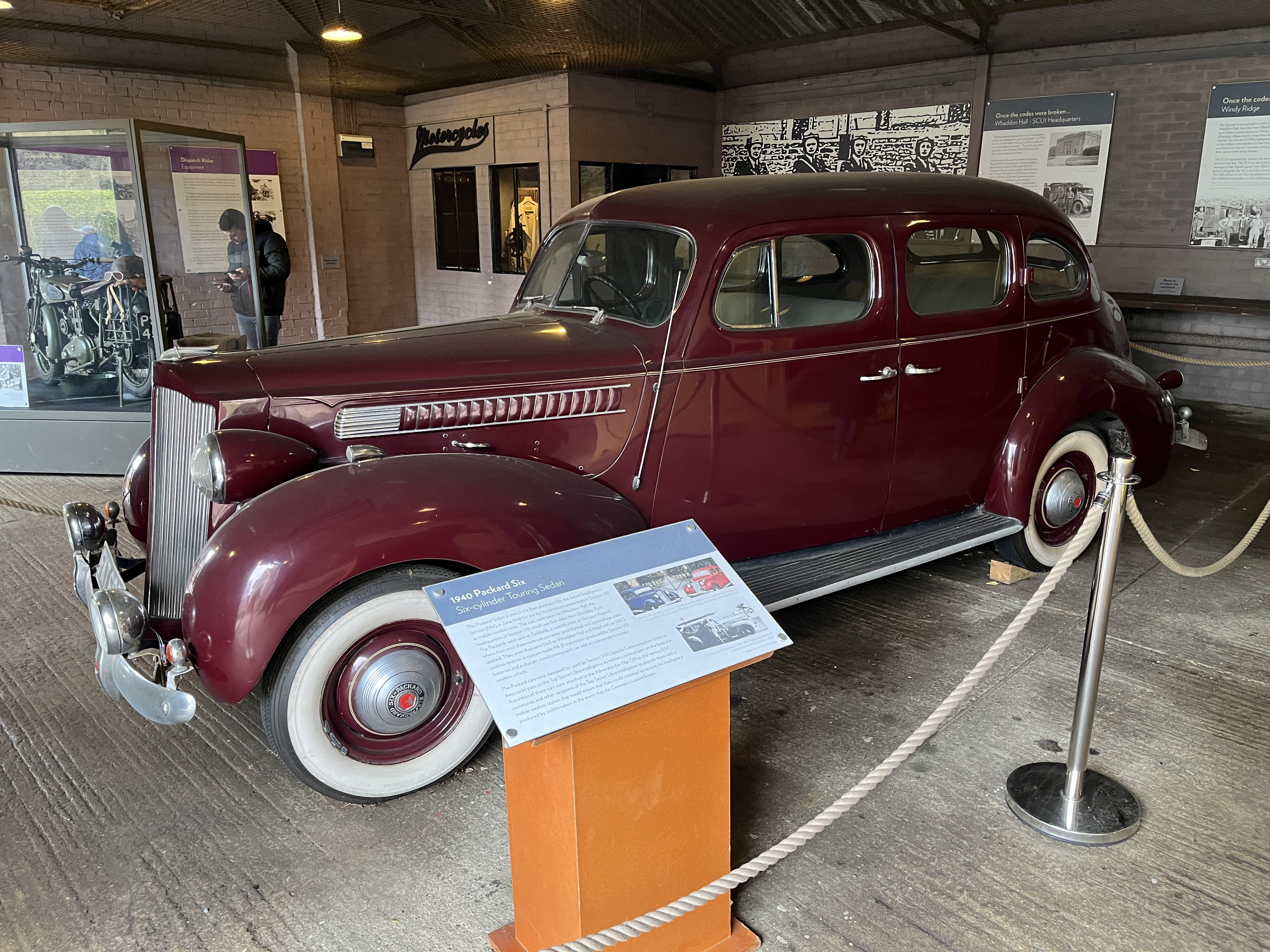
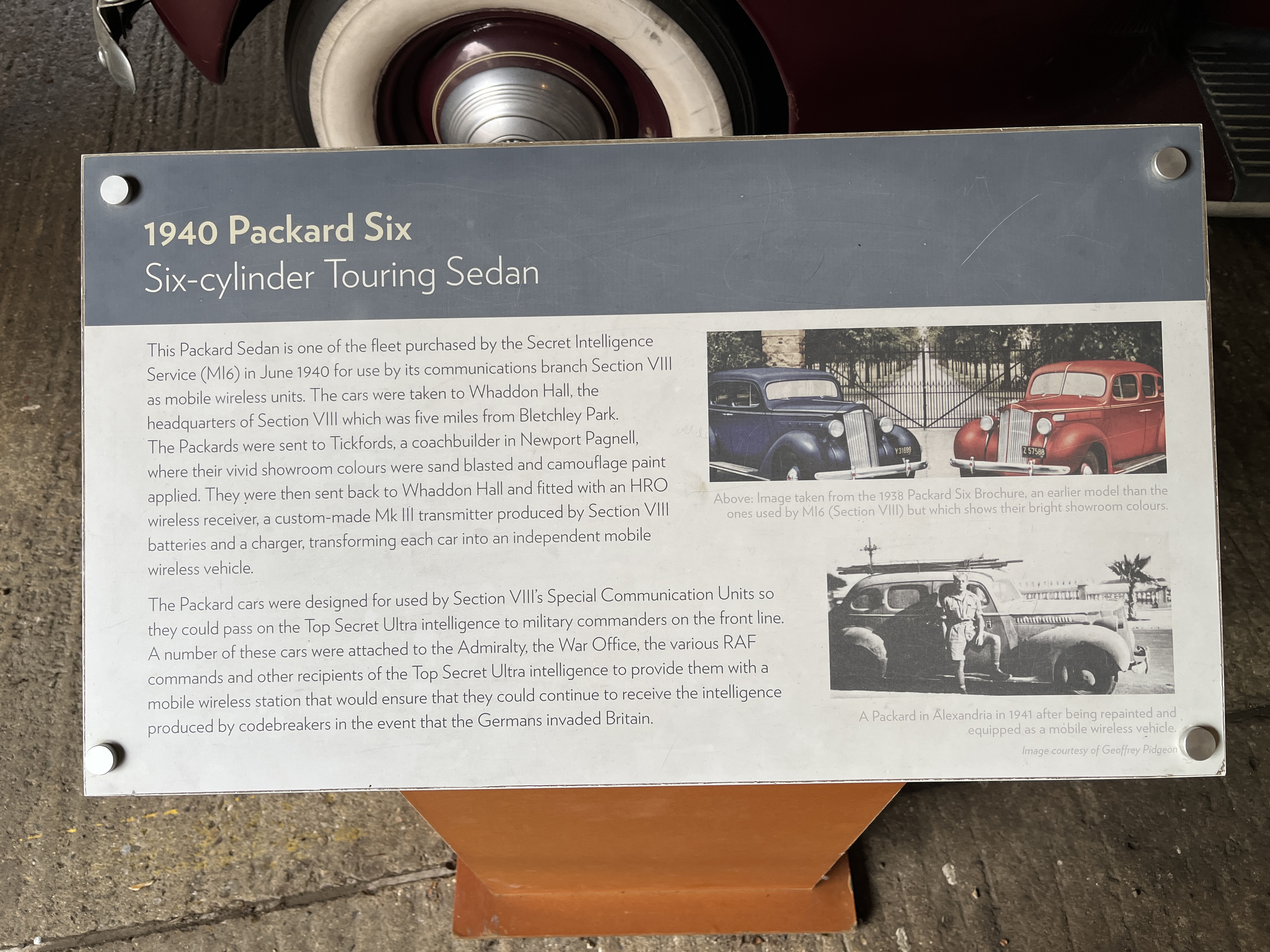
The system depended, ultimately, on an enormous quantity of individually unremarkable activity: a farmer's wife who had learned Morse for fun before the war, now listening at a set hidden in a hay barn for a transmission that might never come; an engineer in a Buckinghamshire stable block soldering components by lamplight; a saloon car parked, apparently innocently, outside a Highland shooting lodge, its boot containing equipment that could put a message from the far north of Scotland into London within minutes. None of it looked, from the outside, like anything at all. That was, of course, exactly the point.
The intercept stations: listening for the enemy across the Home Counties
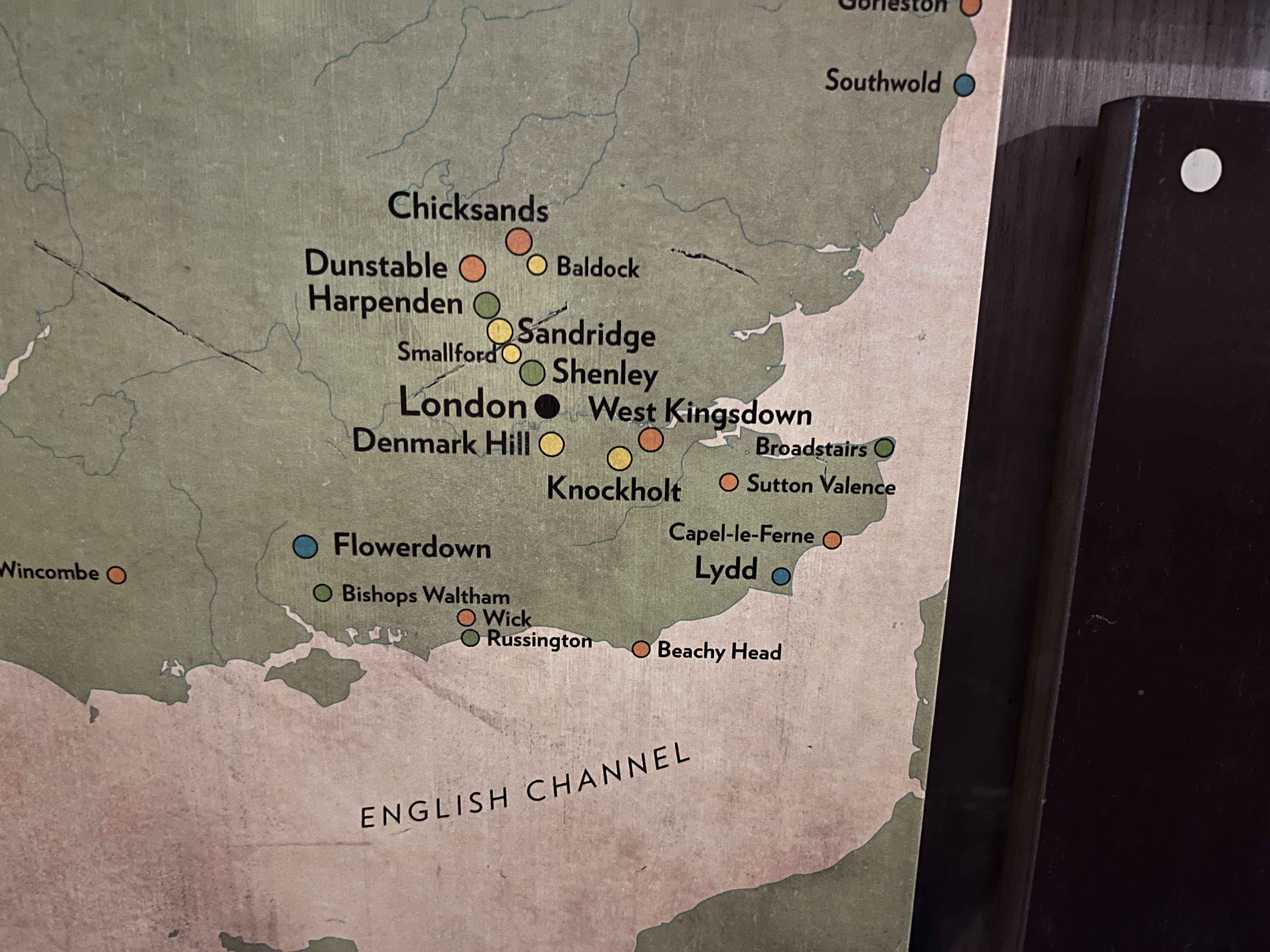
Parallel to the SIS communications network, a separate and much larger listening apparatus was built to intercept enemy radio traffic in the first place — the raw material that Bletchley Park's codebreakers would then need to decrypt. This was the Radio Security Service, working alongside dedicated Royal Navy, Army, RAF and GPO intercept stations distributed in a dense pattern across the south and east of England, the stretch of coastline and countryside closest to occupied Europe and therefore best placed to pick up German transmissions.[8]
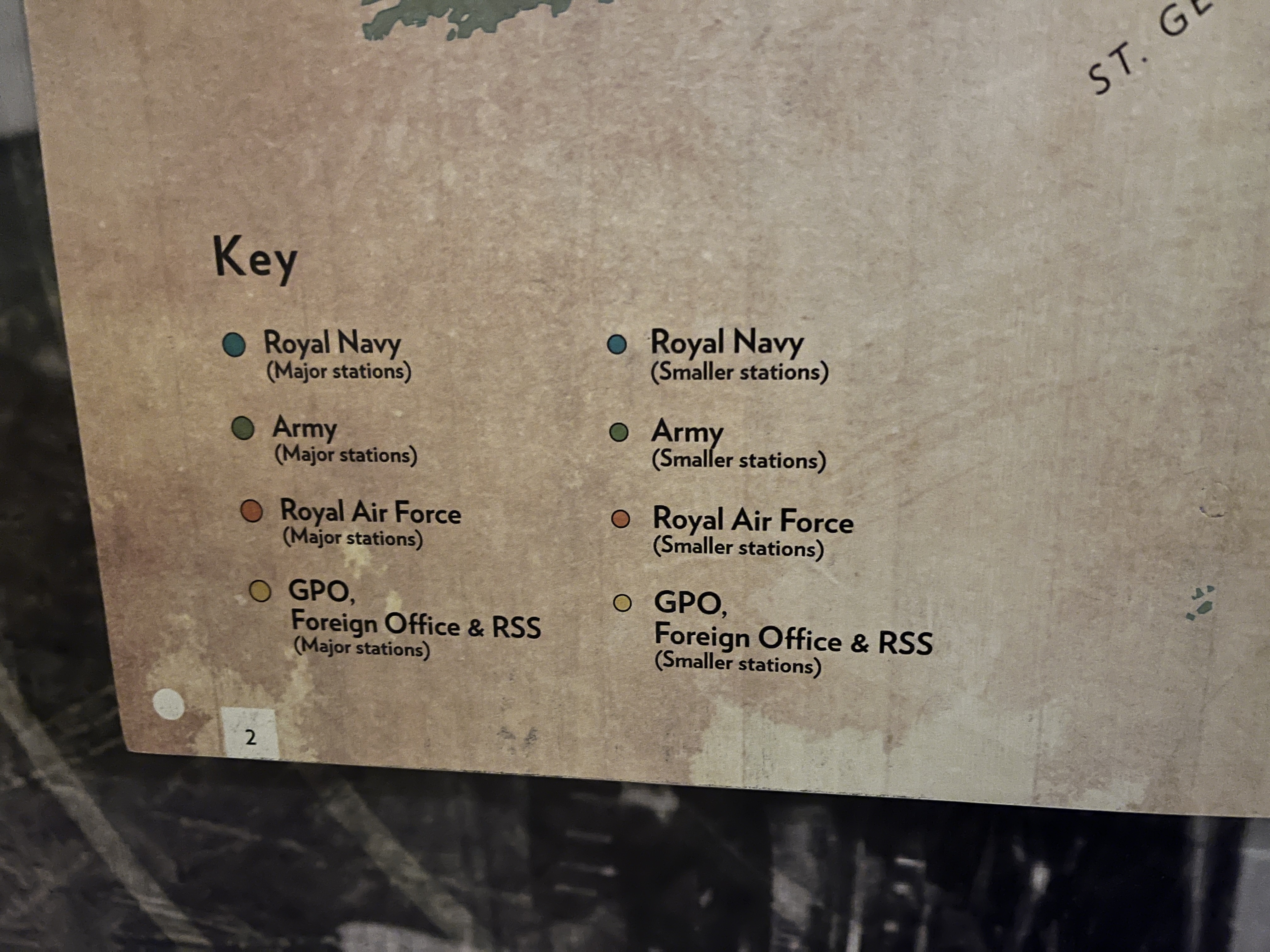
The stations were colour-coded by service in the operational maps of the period — Royal Navy stations in blue, Army stations in green, Royal Air Force stations in orange, and GPO, Foreign Office and Radio Security Service stations in yellow — with major and minor stations distinguished within each category.[9] The pattern of dots across Kent, Surrey, Sussex and the Home Counties — clustering around Knockholt, West Kingsdown, Sutton Valence, Dunstable, Chicksands and dozens of smaller sites — represents the physical scale of an operation that, like everything else described on this page, left almost no trace in the public memory of the war it helped to win. Knockholt in particular was the principal site for intercepting the German Lorenz cipher traffic that fed the highest-level Bletchley Park decryption work; its location, a few miles from Chartwell and from the Bacon family's farm at St Mary Platt, places this most secret of listening operations within the same small stretch of the Kent Weald that runs through every chapter of this story.
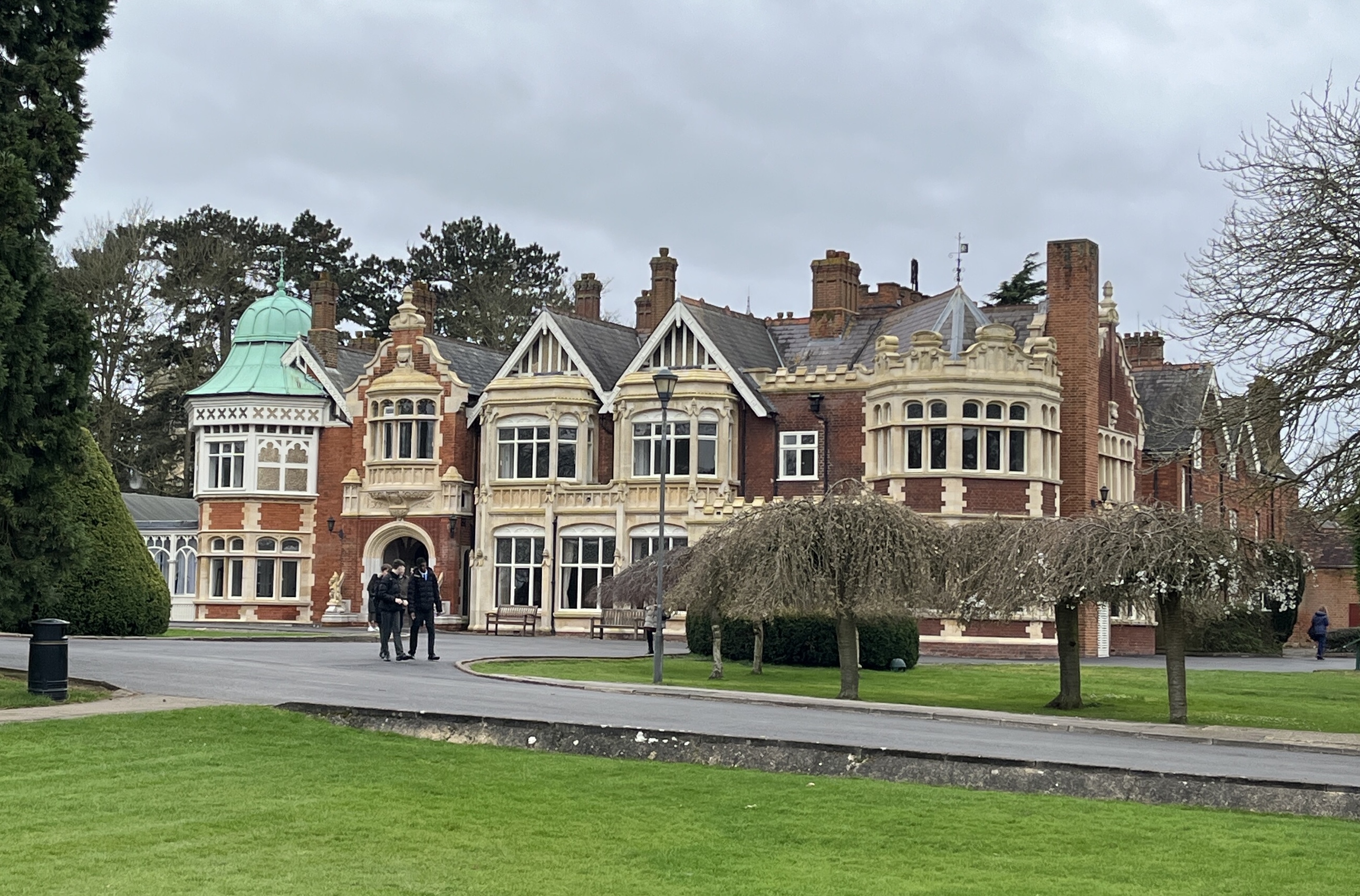
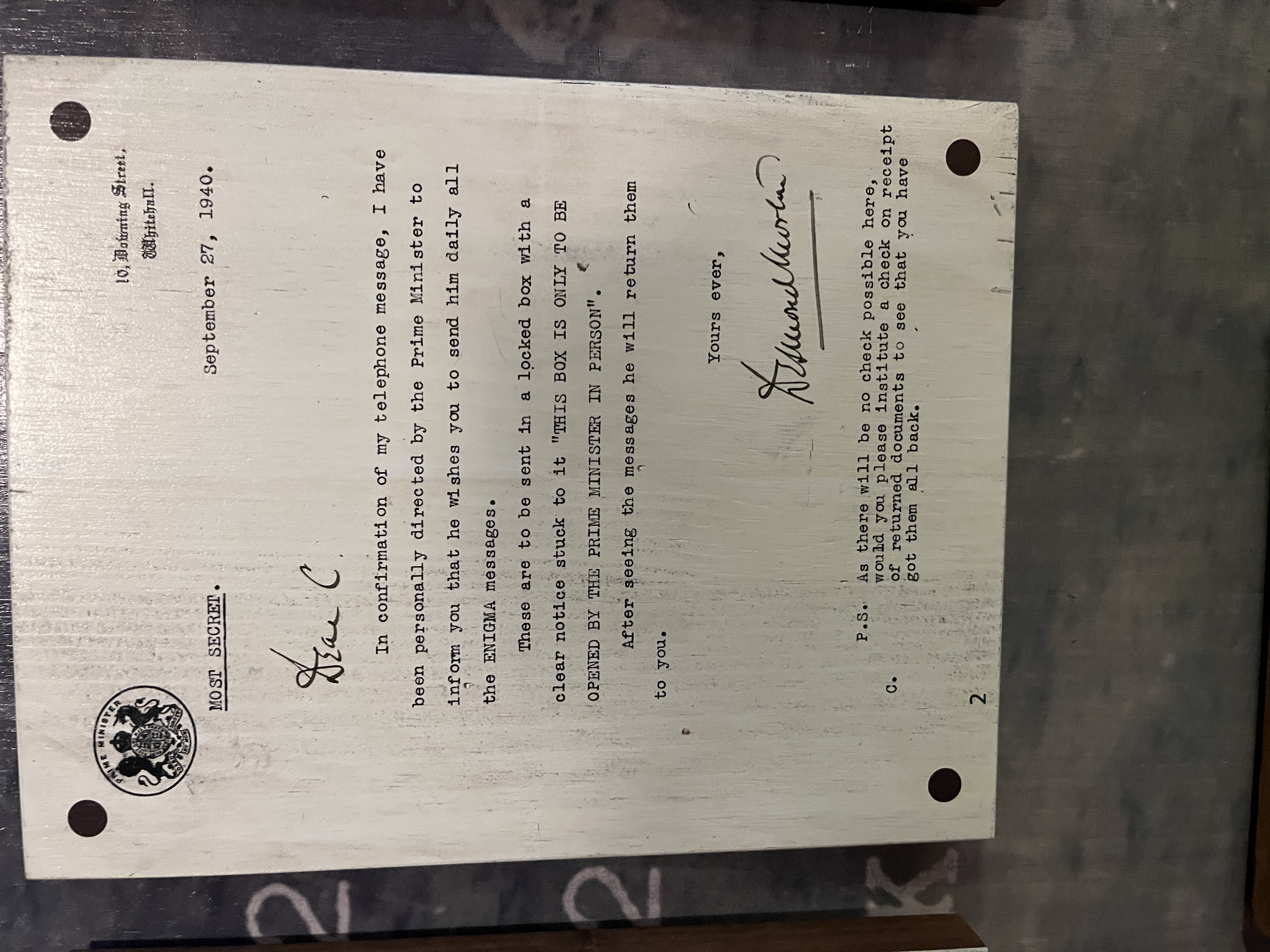
Bletchley Park itself — the destination for the material these stations intercepted — sits a few miles from Whaddon Hall, and the relationship between the two sites was constant and operationally essential: codebreaking output had to reach commanders in the field, and Section VIII's network, including the Packard wireless cars, was how that happened.[10]
The car came from the north-west after an hour. It was a Packard Sedan — one of the American saloons that had been bought in job lots from a west London dealership in 1940, fitted with shortwave wireless gear built in the stables at Whaddon Hall by engineers recruited from Philco. Scottish Command had received one. So had the Admiralty. And one had come north with Bearsted's people to a moorland track in Caithness, where it had been waiting since before the aircraft lifted from the loch.