Eagle's Rock: The Sunderland That Flew the Wrong Way
An aircraft filed for Iceland left Loch More and turned almost due south. Twenty minutes later it struck a hillside above the Berriedale Water, killing fourteen of the fifteen men aboard. The official inquiry could not explain why it was flying in the opposite direction from its destination.
At 13:10 on 25 August 1942, Short Sunderland W4026 of 228 Squadron, RAF Coastal Command, lifted off the water at Loch More in Caithness.[1] Its filed flight plan was routine for the squadron: north along the east coast of Scotland, then north-west across the Atlantic to a Royal Air Force station in Iceland. Fifteen men were aboard, eleven of them crew, four of them passengers — among the passengers, Prince George, Duke of Kent, the King's brother, travelling in his capacity as an Air Commodore on an official welfare inspection.
The aircraft did not turn north. Within minutes of take-off it banked south-east, descended to a few hundred feet, and flew at low altitude across open moorland in clear weather. At approximately 13:30 it struck the hillside above the Berriedale Water gorge, at a place since known as Eagle's Rock, and broke apart. Fourteen of the fifteen men aboard died, including the Duke of Kent. The sole survivor, tail gunner Flight Sergeant Andrew Jack, was thrown clear and found some distance from the wreckage, unconscious but alive.[2]
| Departure | Loch More, Caithness, 13:10 |
| Filed destination | Iceland, via standard north Coastal Command route |
| Filed heading from Loch More | approx. 330° (north-north-west) |
| Actual heading at impact | approx. 168° (south, almost reciprocal) |
| Time to impact | approx. 20 minutes |
| Crash site | Eagle's Rock, above Berriedale Water gorge |
| Fatalities | 14 of 15 aboard |
| Sole survivor | Flight Sergeant Andrew Jack, tail gunner |
The inquiry into the crash, convened under Air Vice Marshal Sir Philip Babington, sat between 26 August and 12 September 1942.[3] It found the aircraft mechanically sound before departure, the crew experienced, and the weather clear. Its conclusion was navigational error — that the aircraft had, for reasons the inquiry could not establish, descended too early and flown a course inconsistent with its filed plan. The report's own language is notably guarded on the central point: it records that "the cause of the deviation from the planned route cannot be determined on the evidence available."[4] An inquiry convened specifically to determine the cause of a fatal crash, examining a deviation of roughly a hundred and eighty degrees from a filed flight plan in good visibility, concluding that the cause of that deviation could not be determined, is not language that closes a question. It is language that records one.
"The cause of the deviation from the planned route cannot be determined on the evidence available." — Air Ministry inquiry, 1942
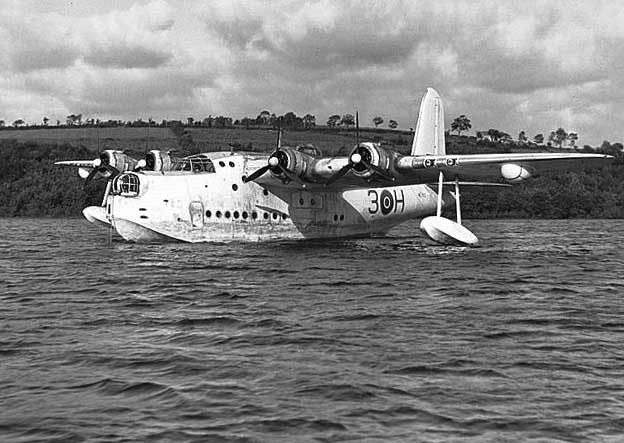
What is documented stops there: an aircraft, a filed plan, a divergence the inquiry recorded but could not explain, and a survivor sworn to silence for the rest of his working life. The Duke of Kent was the most senior member of the British royal family to die on active service in the modern era, and his death was treated, at the time and for decades afterward, as a tragic accident — clear skies, an experienced crew, and an unexplained error that cost fourteen lives. The file on Sunderland W4026 remains, formally, closed.
Cyril counted the seconds between the engine noise and the sound that followed it, the way he had been taught to count anything that mattered. There was no third sound. He had expected one.
He did not move from where he was lying until the noise of the search parties reached him an hour later, and even then he moved only as far as he needed to, and no further.