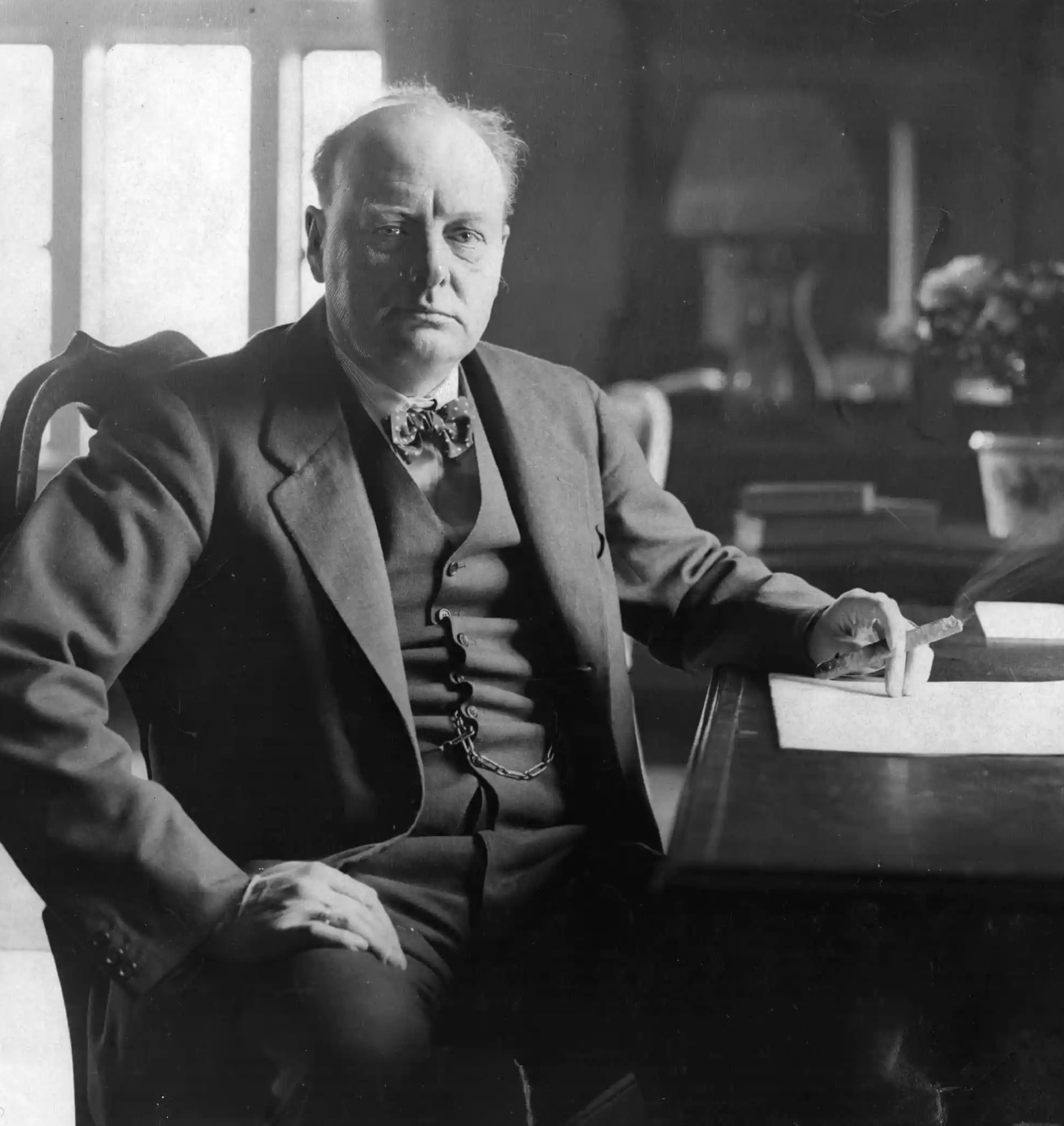
Winston Leonard Spencer Churchill held no government office between 1929 and 1939 — the decade during which the political decisions that made the Second World War inevitable were being made.[1] He was a backbench MP, a prolific journalist, and a man who was almost universally regarded by those in power as an embarrassing relic: clever, certainly, but wrong on India, wrong on the abdication, and wrong — above all — on Germany. The assessments he made of German rearmament in Commons speeches throughout the 1930s were considered alarmist by the government, patronising by his colleagues, and tiresome by the press proprietors who depended on their relationships with the government and were not going to risk them for Churchill.
The assessments were accurate. This fact was privately acknowledged within the intelligence community and publicly suppressed.
Chartwell: the house and the lake
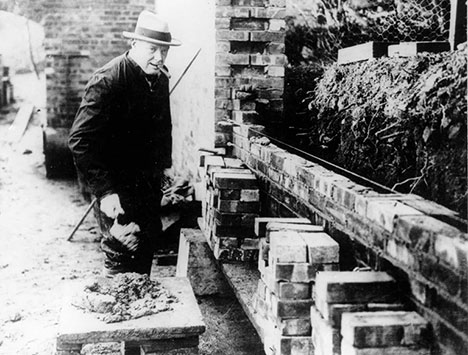
Churchill bought Chartwell, near Westerham in Kent, in 1922 — against the advice of his wife, who thought it was impractical and expensive.[2] He spent a great deal of his own money transforming the grounds: building walls, digging a swimming pool, and, most significantly, damming the stream at the bottom of the valley to create two lakes — one for swimming, one for the waterfowl he kept and bred. The valley he created is one of the distinctive features of the property: a steep-sided depression that runs below the level of the house and outbuildings, invisible from the road, and — critically — acoustically separated from any point from which a listening device might plausibly be installed.
By 1937 the GPO intercept section, operating under the direction of Joseph Ball of the Conservative Research Department, was monitoring calls made from and to Chartwell.[3] Ball's operation — which has been confirmed in the literature from multiple sources — was one of the most significant domestic intelligence operations against a political figure in British twentieth-century history. Churchill was aware that his telephone was compromised and conducted the conversations he most needed to have in person and outside the house.
He became Prime Minister on 10 May 1940 — the same day Germany launched its western offensive.[4] Within hours of his appointment he had begun the process of dismantling the network that had operated against him during the wilderness years: Ball was removed, the newspapers were freed from political pressure, and the intelligence community was reorganised under new direction. The men and women who had kept him informed during the previous decade were not forgotten.