Major Sir Desmond John Fitz-John Morton was one of the most influential intelligence officers in British twentieth-century history — and one of the least documented.[1] Born in Woolwich in 1891 into a military family, educated at Eton and the Royal Military Academy Woolwich, he was commissioned into the Royal Field Artillery and served with distinction on the Western Front.[2] At the Battle of Arras in April 1917 he was struck by a German bullet that lodged in a position doctors advised against removing.[3] He carried it for the rest of his life. He never mentioned it.
After the war Morton entered the intelligence world, serving briefly in SIS before being appointed Personal Assistant to the Chief of the Secret Intelligence Service, Admiral Sir Hugh Sinclair.[4] In 1929 he became the first head of the newly established Industrial Intelligence Centre, a body tasked with assessing the war potential of foreign nations — with Germany its primary target from the outset.[5] The IIC's work was technically directed at economic analysis, but in practice Morton used it to build a picture of German military capability that the official intelligence assessments were, for political reasons, declining to produce.
Churchill, the wilderness years, and the private intelligence network
Morton's relationship with Churchill is documented from the early 1920s, when Churchill was Colonial Secretary and Morton was working for SIS.[6] The relationship deepened during Churchill's wilderness years — the decade between 1929 and 1939 when he held no government office and was largely shut out of official intelligence channels. Morton became Churchill's primary source of information on German rearmament, supplying him with material that Churchill then deployed in Commons speeches that embarrassed the government and were widely regarded as alarmist.[7] The government was aware of this arrangement and chose not to intervene — perhaps because they did not believe Churchill's warnings would be heeded, perhaps because they found it useful to have someone saying in public what they themselves were declining to acknowledge.[8]
Morton's access to Churchill was regularised in an unusual way: he had been given official permission, by Prime Minister Baldwin and later by Chamberlain, to pass intelligence material to Churchill in a personal capacity.[9] This made him simultaneously a servant of the government and a private intelligence conduit for its most prominent critic — a position that required considerable personal dexterity. That Morton maintained it for a decade without being recalled or censured tells you something about how useful he was considered on both sides of the arrangement.
"He had been given official permission to pass intelligence material to Churchill in a personal capacity — simultaneously a servant of the government and a private conduit for its most prominent critic."
Earlylands: the house one mile from Chartwell
Morton's choice of residence is one of the most consistently noted features of his biography: he lived at Earlylands, Westerham, Kent — 1.1 miles from Churchill's house at Chartwell, measured by field path rather than road.[10] The proximity is documented; its operational significance has been the subject of varying interpretations. John Colville, who served as Churchill's private secretary, described Morton as a regular visitor who would walk across the fields, arriving without announcement and without a record in any visitors' book.[11]
The surveillance of Churchill's telephone at Chartwell by the GPO intercept service under Joseph Ball's direction — confirmed in the literature — makes the significance of an unrecorded footpath route self-explanatory.[12] A man who could arrive at Chartwell by crossing two fields, hold a conversation on the far bank of a lake a quarter of a mile from the house, and return without being seen or logged, was operationally invisible in a way that no visitor arriving by car at the main gate could ever be.
The Weald of Kent in the 1930s was still primarily agricultural land, its field paths and bridleways well-maintained and routinely used by those who knew them. The thirteen-mile distance between Westerham and the farms and market gardens of the mid-Weald could be covered on motorcycles on roads that carried almost no traffic before six in the morning. The operational geography of the area — the proximity of Earlylands to Chartwell, the road network south toward the Greensand Ridge, the daily pre-dawn movement of produce lorries to Covent Garden — was precisely suited to an intelligence operation that needed to move information without leaving a trail.[13]
Morton's eyes moved along the frames on the wall, over the workbenches, to the gilding tools, to the pots of glue, to the half-finished frame on the largest table with the linen canvas laid over it for protection. Albert watched him looking and understood — in the way that a man who has survived his own life understands things — that this was not a social call.
"You install furniture and paintings in the great houses," Morton said. It was not a question.
"I do, sir. We have clients in most of the large estates in Kent and Surrey. My grandsons help me with the deliveries and the larger installations."
"The boys." Morton nodded slowly. "Geoffrey, Reginald and Cyril."
Albert felt something move in his chest — not quite alarm, not quite pride. The man had done his homework. Then Morton picked up one of Albert's frames from the wall — a beautiful thing, eighteenth century, English, with a swept profile in water gilt — and turned it over and tapped the back panel with one finger.
"How difficult," Morton said quietly, "would it be to make room for something else in here?"
Wartime and after: the operational record that was never kept
When Churchill became Prime Minister in May 1940, Morton was brought into Downing Street as a personal assistant with a brief that was never formally defined and a role that was never publicly acknowledged.[14] He served in this capacity throughout the war, acting as a conduit between Churchill and the intelligence community and handling material that did not pass through the formal Cabinet Office machinery. His position allowed him to be simultaneously present at the centre of wartime decision-making and absent from its formal record.
After the war Morton held a number of advisory positions and received a knighthood in 1945. He gave no interviews about his wartime role. He wrote no memoir. Before his death in 1971 he destroyed his personal papers — a deliberate and methodical act that, as Colville noted, was entirely consistent with how he had conducted himself throughout his career.[15] What survives is the official correspondence from his IIC years, a small number of references in others' memoirs, and the field path between Earlylands and Chartwell.
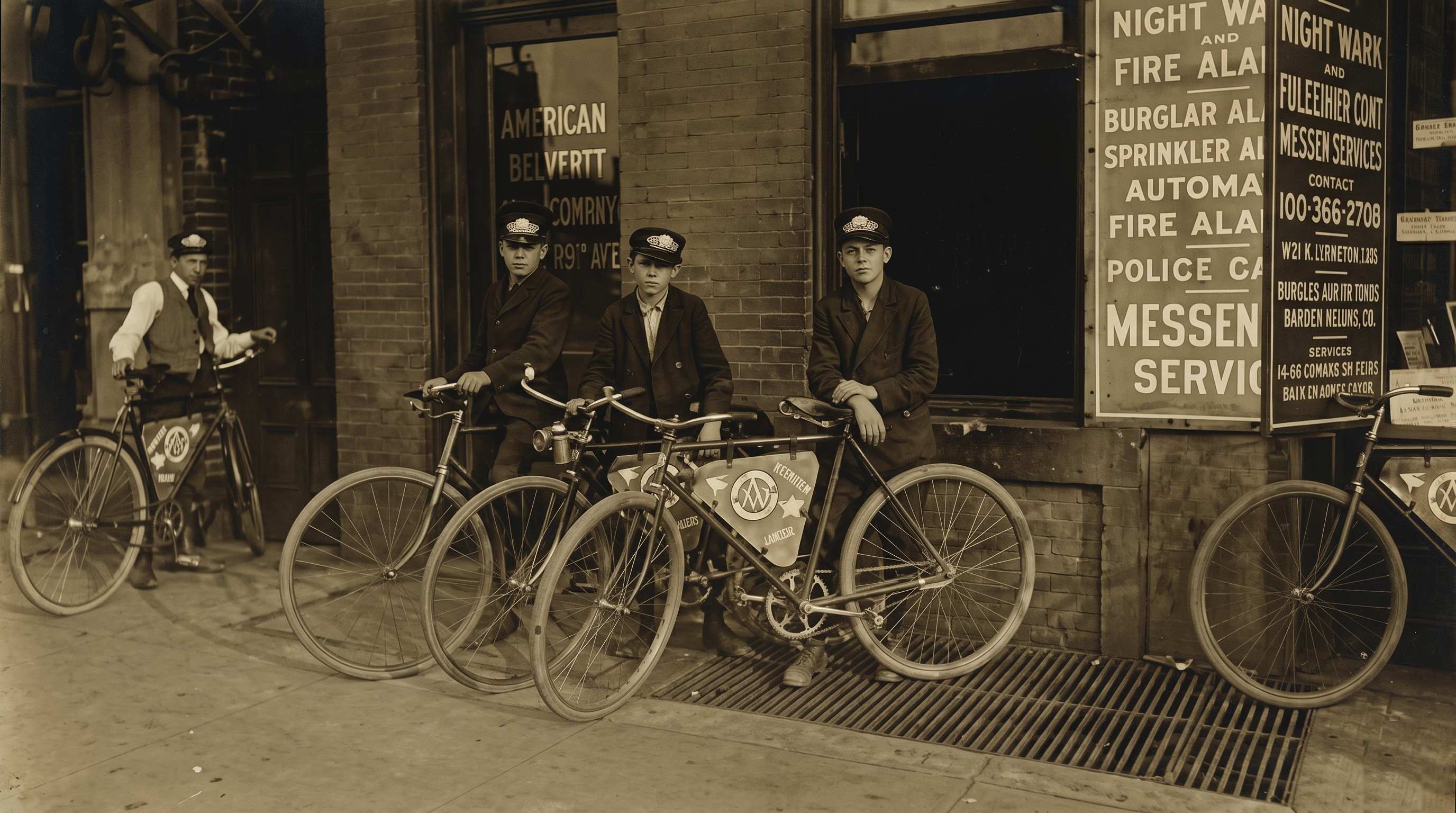
According to the family account disclosed in Valletta in 2005, Morton made a single visit to Albert Ernest Collings's workshop in Bromley, sometime in early 1929 — weeks after the Mereworth shoot in which Albert had shielded Churchill. The visit lasted approximately forty minutes. Morton left without having accepted tea.
His subsequent contact with the three brothers was, by family account, always indirect — filtered through Albert Ernest or communicated through Desmond Morton's walk across the fields to Chartwell, and from there by means that the family history does not specify. The brothers never met Morton formally. Cyril, who was the most operationally active of the three, described him in the Valletta disclosure only as "the man who told your grandfather what to build." He did not use Morton's name unprompted.
The operational relationship between Morton and the Collings-Bacon family — if it existed as described — would represent exactly the kind of arrangement Morton was known to prefer: civilian assets, no formal documentation, deniable at every level. The family history cannot be independently verified. The operational architecture it describes is consistent with Morton's documented methods and with the intelligence environment of the period.