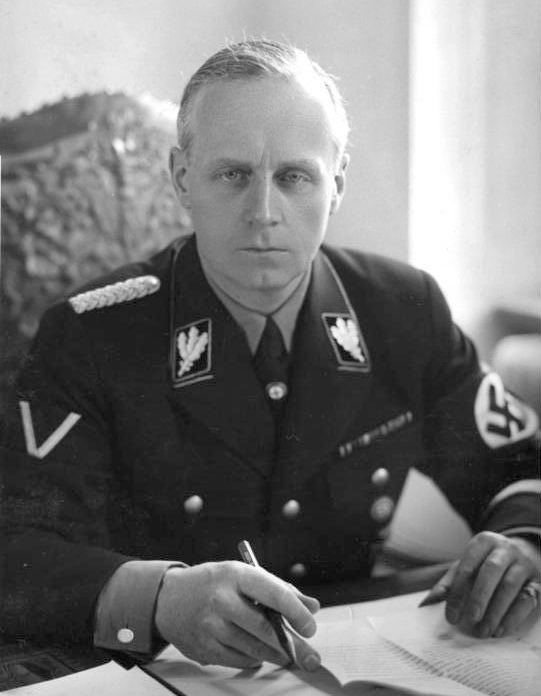
Joachim von Ribbentrop arrived in London as German Ambassador in October 1936, a few weeks before the abdication crisis reached its public conclusion.[1] He had been chosen by Hitler personally for a posting that Hitler considered among the most important of the diplomatic calendar: Britain was the power whose attitude toward German expansion would determine whether a continental war was avoidable. Ribbentrop's mission was to persuade the British establishment that it was not only avoidable but desirable — that German dominance in central and eastern Europe was compatible with British interests, and that the only alternative was the catastrophe of another war.
He was not well suited to the task by temperament. British diplomats and politicians found him vain, literal-minded, and socially aggressive — a man who had come to his aristocratic presentation through the wine trade and a strategically useful marriage, and whose manner made these origins apparent.[2] He nevertheless had access. He moved through the same houses and shooting parties and London dinners as the men he was sent to influence. He knew who mattered and sought them out with a persistence that the British Foreign Office found both admirable and alarming.
The London networks: who Ribbentrop knew and why it mattered
During his eighteen months as Ambassador, Ribbentrop cultivated relationships across a wide span of British society: politicians, press proprietors, industrialists, and members of the royal household.[3] His relationship with the Prince of Wales — and through him with Wallis Simpson, whose influence over the Prince was by 1936 total — was particularly significant. The German Embassy's files on this period, partially available in the Marburg papers and the Political Archive of the German Foreign Ministry, show an intelligence interest in the Wallis Simpson connection that went well beyond normal diplomatic cultivation.
Ribbentrop left London in February 1938 when Hitler appointed him Foreign Minister — a promotion that surprised many observers, who regarded him as temperamentally unsuited to the role.[4] He was replaced by Herbert von Dirksen. The networks he had built during his London posting did not disappear with his departure; they were maintained by the Embassy's intelligence section and by the personal relationships he had established.
He was convicted at Nuremberg and hanged on 16 October 1946 — the first of the major war criminals to be executed. In his final statement he expressed regret that his efforts toward an Anglo-German understanding had failed and maintained that the war had been unnecessary. Whether his understanding of what "unnecessary" meant was the same as that of those who had listened to him in London drawing rooms is a question his memoir does not address.[5]