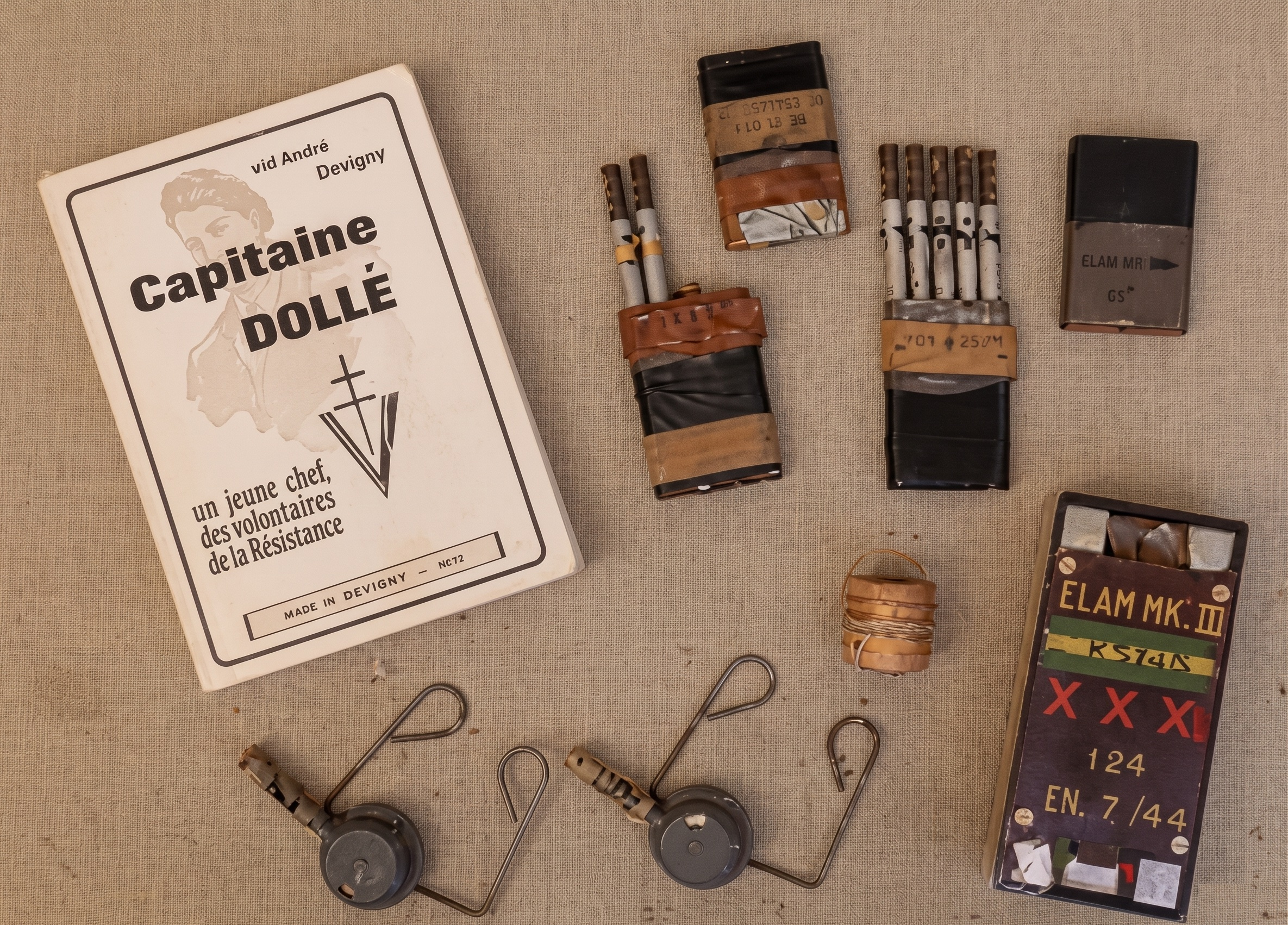
The Stylo Pen
A working pen that was not, in fact, a pen.
Among the most distinctive products of Britain's wartime special-devices research was a category of concealed sabotage and self-defence equipment disguised as ordinary objects of daily use — fountain pens, pencils, cigarette lighters, even tins of talcum powder, each housing a working mechanism with nothing about its outward appearance to suggest it.[1] These devices were developed primarily through the Special Operations Executive's Station IX research establishment at The Frythe, near Welwyn, and produced for distribution through Station XII at Aston House — the same network of facilities that grew out of, and absorbed, the earlier work of SIS Section D.
Pen-bodied incendiary and small-charge devices of this type — generally referred to in period documentation by names tied to their manufacturer or design, of which "Stylo" is one documented variant — worked on broadly similar principles: a small explosive or incendiary charge housed in a barrel made to pass as an ordinary writing instrument, with a delay or contact fuse triggered by removing the cap, applying pressure, or another simple, unobtrusive action.[2] An object that every clerk, officer and civilian carried without a second glance was, by that same logic, the perfect housing for something that needed to go unnoticed until the moment it was meant to be noticed.
Nobby set it on the table among the time pencils as though it were the least remarkable thing in the room, which, Cyril supposed, was rather the point of it.